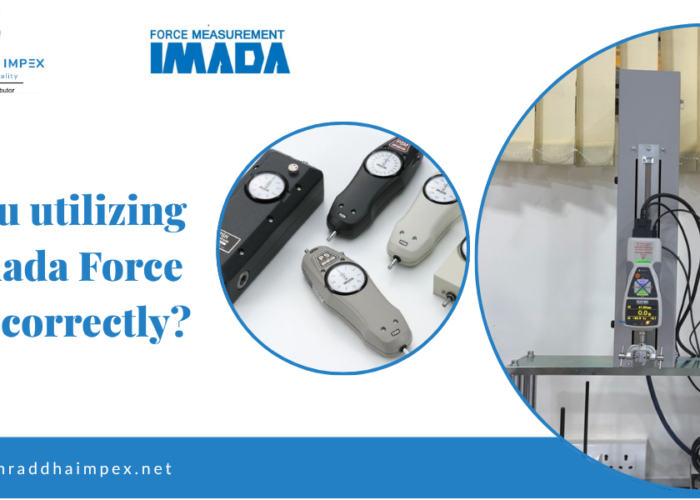
If you are new to force measurement, understanding how force gauges and test stands work together is the first step. A force gauge guide always starts with the basics. Force gauges, also called push-pull gauges, are devices used to measure force, such as tension, compression, and pulling strength. They are widely used in quality testing, product development, and manufacturing.
When you combine a force gauge with a test stand, you get much more accurate and repeatable results. This is why professionals prefer systems like an Imada push-pull gauge or imada force gauge with a test stand. Instead of measuring by hand, the stand controls the movement, speed, and direction, which reduces human error and improves consistency.
This simple buying guide will help beginners choose the right force test stand without confusion.
What is a Force Test Stand?
A force test stand is a support system that holds and moves a force gauge during testing. It can move the gauge vertically or horizontally to apply force in a controlled way.
Types of Force Test Stands
1. Manual Test Stands
Manual stands are operated using a lever or handle. They are simple, cost-effective, and do not require electricity.
They are ideal for:
- Small labs or workshops
- Basic testing needs
- Beginners with a limited budget
They also improve consistency compared to handheld testing, even though they are manually operated.
2. Motorized Test Stands
Motorized stands are more advanced. They use a motor to control speed and movement.
They are best for:
- High precision testing
- Repetitive or continuous testing
- Advanced applications like durability testing
These stands provide uniform speed and can be programmed for specific force, time, and cycles. This makes them highly reliable for professional use.
Key Factors to Consider Before Buying
1. Force Capacity
Always choose a test stand that can handle more force than your expected testing range. This ensures safety and accurate readings.
2. Stroke Length
Stroke refers to how far the stand can move. If you are testing large samples, you will need a longer stroke.
3. Compatibility with Force Gauges
Make sure your stand works well with your force gauge. Most systems like imada force gauge are designed to integrate easily with compatible stands for better performance.
4. Type of Testing
- For simple push/pull tests → Manual stand is enough
- For detailed analysis → Motorized stand is better
5. Accuracy and Repeatability
Test stands are mainly used to improve repeatability. If your work requires precise results, investing in a motorized option is a smart decision.
Why Use a Test Stand Instead of Handheld Testing?
Handheld testing is quick, but it is not always reliable. When you mount a force gauge on a test stand:
- Speed becomes consistent
- Direction remains fixed
- Results become more accurate
This setup also allows testing of higher forces safely and easily.
Choosing the right force test stand does not have to be complicated. Start by understanding your testing needs, budget, and accuracy requirements. If you are just starting, a manual stand paired with a good push-pull gauge can do the job. But if you want precision and automation, go for a motorized system.
If you are planning to buy genuine force measurement equipment, it is important to purchase from an official distributor like Shraddha Impex. Buying from an authorized distributor ensures that you get original products, proper technical support, warranty, and calibration services if required.