If you use an IMADA force gauge only to take basic force readings, you may be overlooking several features that can make your testing faster, more accurate, and easier to manage.
An IMADA force gauge is designed for more than displaying a force value. Depending on the model, features such as peak detection, internal memory, alarm setpoints, and data management can help improve testing efficiency and support more consistent quality control.
Whether you are performing tensile, compression, peel, break, or push-pull tests, understanding these functions can help you get more value from your instrument.
What Is an IMADA Force Gauge?
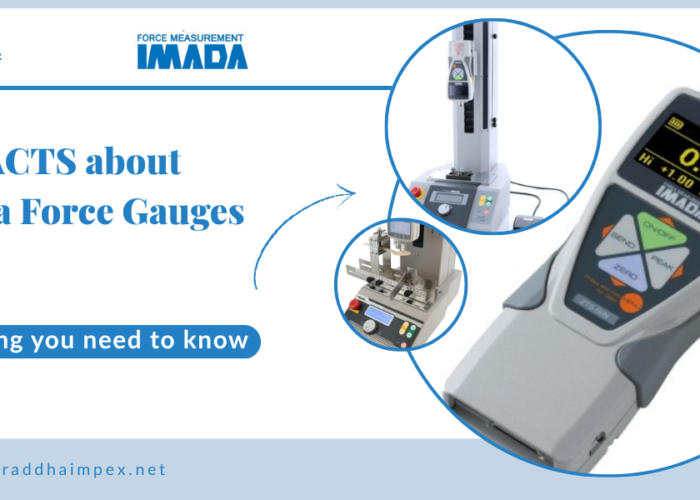
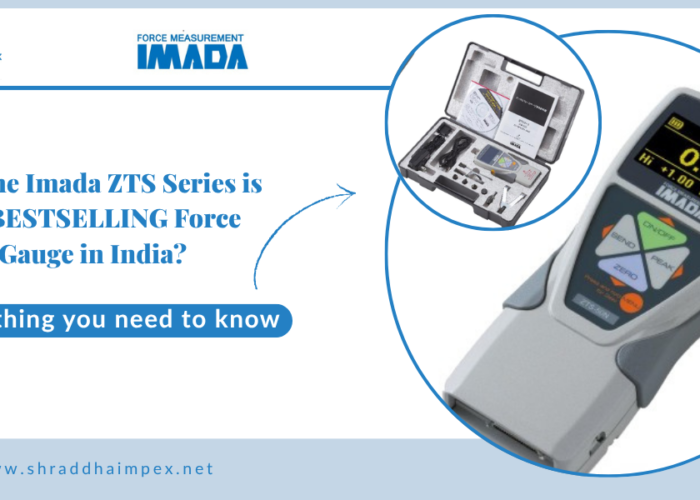
An IMADA force gauge is a precision measuring instrument used to measure tensile and compression forces in applications such as product testing, quality control, material testing, assembly verification, and research.
The right gauge can provide real-time force measurements while also offering useful testing functions that go beyond a standard live reading.
If you are selecting a model, reviewing an IMADA Push Pull Gauge catalogue can help you compare available capacities, resolutions, measurement units, display options, and additional functions before choosing the right instrument for your application.
1. Use Peak Hold to Capture Maximum Force
One of the most useful functions for dynamic testing is peak hold.
During a pull, break, peel, or snap test, the force can change extremely quickly. Watching the live display may make it difficult to identify the exact maximum force reached during the test.
Peak hold captures and retains the peak force value, allowing you to review the result after the test has been completed.
This is particularly useful for applications such as:
- Break-force testing
- Peel testing
- Push and pull testing
- Snap-fit testing
- Material testing
- Product failure testing
Instead of trying to catch a changing number on the screen, you can focus on performing the test correctly and review the peak value afterward.
2. Make Better Use of the Internal Memory
Recording every measurement manually can be time-consuming and can introduce unnecessary errors.
Models equipped with internal memory can store measurement results for later recall, helping you keep track of test data without immediately transferring every reading to paper or another system.
This can be useful when you are performing multiple tests in succession and want to review the results afterward.
Before relying on a particular memory function, always check the specifications of your model and refer to the IMADA force gauge manual for the exact storage, recall, and data-management procedures.
3. Use High and Low Alarm Setpoints for Pass/Fail Testing
Quality control often depends on determining whether a measured force falls within an acceptable range.
Instead of manually comparing every result with your specification, you can use high and low alarm setpoints where supported by your IMADA gauge.
For example, if a component needs to withstand a specific force range, you can establish upper and lower limits. The gauge can then provide an indication when the measured value falls outside the defined range.
This makes the testing process more consistent and can reduce dependence on manual judgment.
Alarm functions can be particularly useful for:
- Incoming quality inspection
- Production-line testing
- Assembly verification
- Product validation
- Routine quality checks
4. Get More From Push-Pull Testing
A force gauge becomes even more useful when paired with the appropriate attachments, test stands, and fixtures.
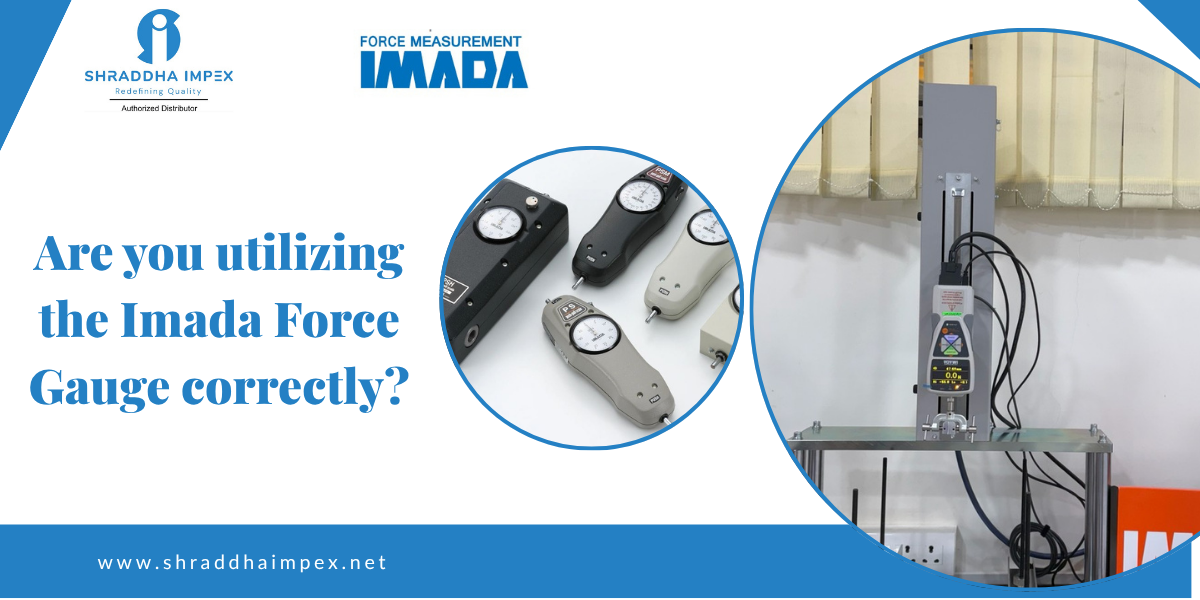
For applications requiring both tensile and compression measurements, an IMADA Push Pull Gauge can provide a practical solution for measuring forces in both directions.
Depending on the application, you may use a force gauge for:
- Push testing
- Pull testing
- Compression testing
- Tensile testing
- Break testing
- Peel testing
- Spring testing
- Button and switch testing
The gauge itself is only one part of the testing setup. Selecting the correct attachments and fixtures is equally important for obtaining reliable and repeatable measurements.
5. Choose the Right Measurement Unit and Resolution
Force testing requirements vary from one application to another. A laboratory material test may require a different capacity and resolution than a simple production-line inspection.
Depending on the model, IMADA gauges can provide measurements in units such as N and kgf, with different capacities and resolutions available across the product range.
When selecting a gauge, consider:
- Maximum force required for the application
- Required measurement resolution
- Whether you need tensile, compression, or both
- Whether peak detection is required
- Whether data storage is important
- Whether alarm-based pass/fail testing is needed
- Whether the gauge will be used with a test stand or custom fixture
Choosing a gauge based only on its maximum capacity may not be enough. The complete testing requirement should determine the most suitable model.
6. Use the Manual and Product Documentation
If you are unsure whether your gauge supports a particular function, the best place to start is the documentation for your exact model.
An IMADA force gauge PDF or model-specific documentation can provide information about operating modes, settings, measurement units, memory functions, alarm configuration, calibration, and communication features.
The IMADA force gauge manual is especially useful when you want to move beyond basic measurements and configure the instrument correctly.
Avoid assuming that every IMADA gauge has exactly the same features. Functions can vary between models, so always verify the specifications of your particular instrument.
7. Turn Your Force Gauge Into a More Efficient QC Tool
The biggest advantage of exploring these features is not simply having more functions. It is improving the overall testing workflow.
A basic process might look like this:
Set up the test → Perform the test → Capture the peak value → Compare with specification → Record the result
With the appropriate gauge functions and test setup, much of this process can become faster and more consistent.
Peak detection helps capture critical force values. Memory functions can help retain test results. Alarm setpoints can simplify pass/fail decisions. Suitable fixtures can improve repeatability.
Together, these features can turn a force gauge from a basic measuring device into a valuable quality-control instrument.
Frequently Asked Questions About IMADA Force Gauges
What is an IMADA force gauge used for?
An IMADA force gauge is used to measure tensile and compression forces in applications such as product testing, quality control, material testing, assembly testing, peel testing, and push-pull testing.
What is peak hold on a force gauge?
Peak hold records and retains the highest or relevant peak force measured during a test. It is particularly useful when force changes too quickly to read accurately from the live display.
Can an IMADA force gauge store test results?
Some IMADA models include internal memory for storing and recalling measurement data. The available memory functions depend on the specific model.
Where can I find an IMADA force gauge manual?
The appropriate manual depends on the exact IMADA model. Always use the documentation corresponding to your gauge to understand its functions, settings, operating procedures, and specifications.
How do I choose the right IMADA Push Pull Gauge?
Start by determining the required force capacity, resolution, measurement direction, testing method, and additional features such as peak detection, memory, alarms, and data communication. Comparing models in an IMADA Push Pull Gauge catalogue can make the selection process easier.
Get More From Your IMADA Force Gauge
An IMADA force gauge can do much more than display a force reading. Features such as peak hold, internal memory, alarm setpoints, and push-pull measurement capabilities can make testing more efficient and help improve consistency in quality control.
If you already have an IMADA gauge, take some time to explore the functions available on your specific model. If you are planning to purchase one, review the specifications and compare carefully to identify the model that best matches your testing requirements.
Need Help Choosing or Using an IMADA Force Gauge?
Shraddha Impex can help you understand IMADA force measurement solutions and select equipment suited to your testing requirements.
Shraddha Impex | Redefining Quality
Authorized Distributor
www.shraddhaimpex.net