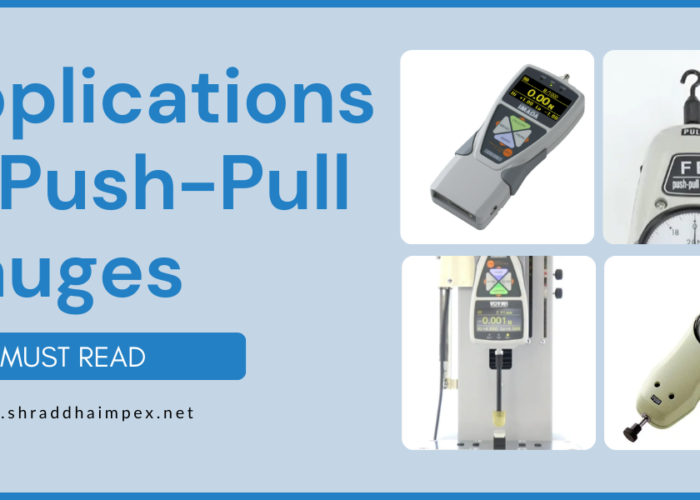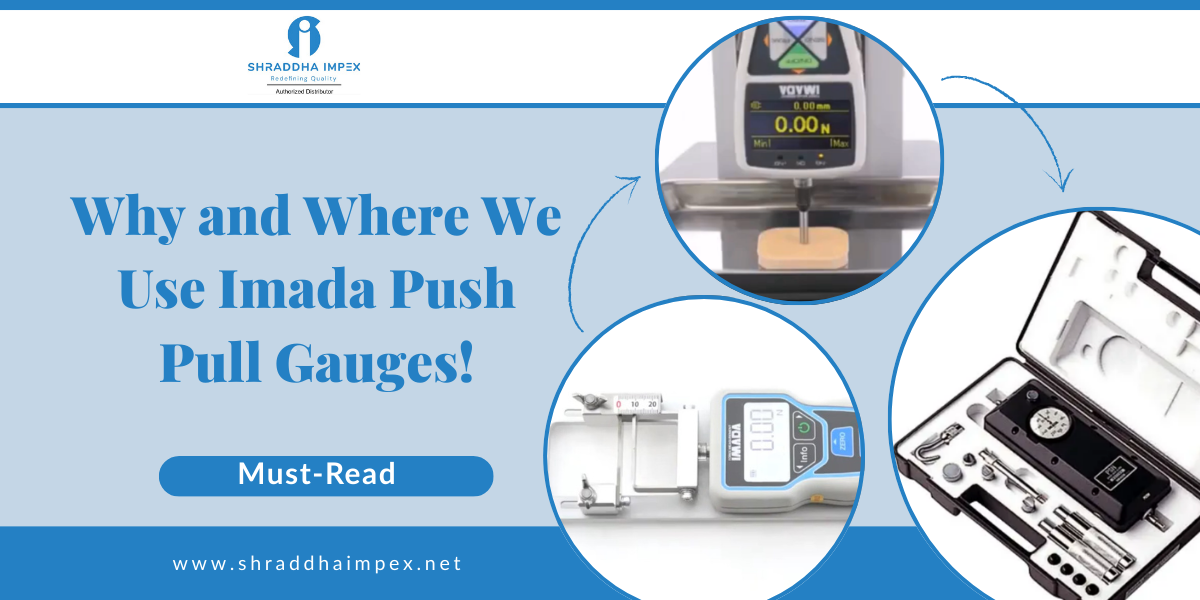
Force gauges, often called push-pull gauges, are essential tools in quality control and product testing. These instruments measure force in tension and compression and help engineers, technicians, and quality teams validate product strength, durability, and safety.
What Push-pull gauges (Force Gauges) Do
A force gauge measures how much force is applied to a component or material before it deforms, breaks, or responds measurably. These tools capture force values in units like Newtons or pounds and may support additional output like graphs, peak detection, or tolerance limits.
There are two main categories:
- Mechanical (Analog) – Uses a spring scale and needle to show force values. Simple, cost-effective, and it works without a power source.
- Digital – Offers clear numeric readings, data logging, graphing, and PC connectivity for deeper analysis.
Why Use Force Gauges
Force gauges give objective, repeatable data that supports quality assurance, design testing, and troubleshooting.
- Material Testing
For raw materials like plastics, metals, or textiles, force gauges verify tensile strength, compression limits, and shear strength. This helps manufacturers meet requirements and prevent failures. - Component Safety Validation
Parts like springs, seals, and fasteners must withstand load without failing prematurely. Force gauges help engineers review performance before assembly lines start. - Process Control
In production environments, gauges check the consistency of daily output. If force values drift beyond limits, corrective action can prevent defects from shipping. - R&D and Prototyping
Digital gauges help research teams visualize force curves over time, revealing how materials behave under load.
Where Force Gauges Are Used
Force gauges are versatile tools used across industries:
- Automotive – Validate the strength of clips, connectors, clamps, and seals.
- Medical – Testing injection, Pinching, and gripping force tests
- Packaging – Measure peel strength of seals or closure forces on lids.
Choosing the Right Force Gauge
The key factors are the expected force range, response speed, and whether you need graphing or data export features. Mechanical gauges fit basic tolerance checks; digital models suit data-driven quality systems.