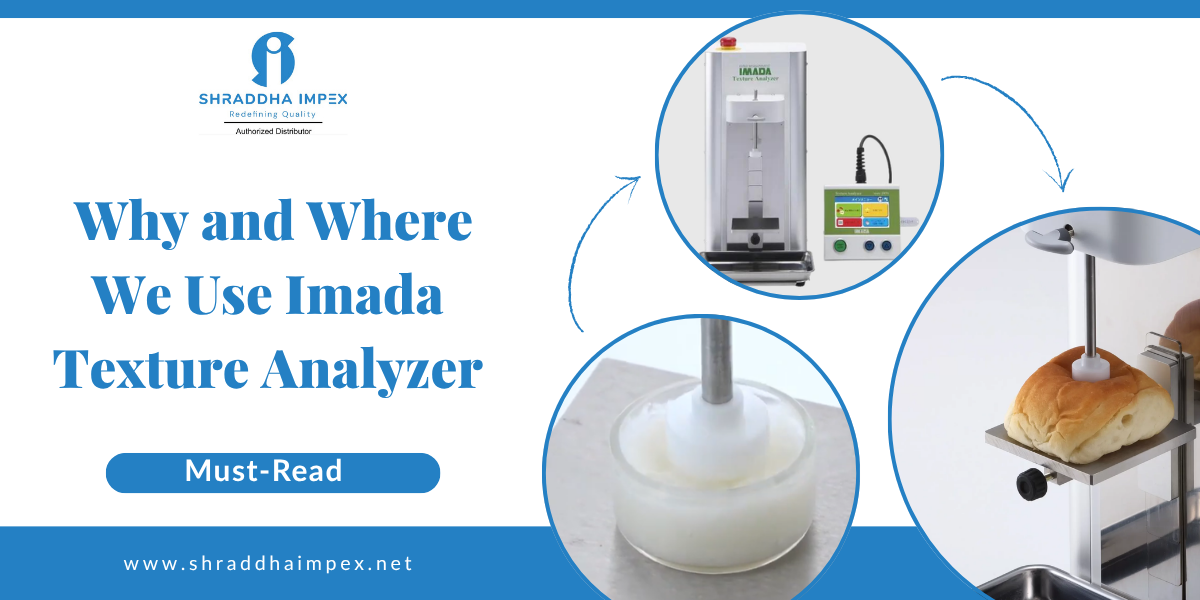
Texture analyzers quantify mechanical properties such as hardness, chewiness, and elasticity in food and materials. Unlike simple force gauges, these instruments measure how a sample responds under controlled compression, tension, or puncture tests.
Why We Use Texture Analyzers
- Product Quality Control
Consistency in texture is important in food products. Texture analyzers help standardize these qualities. - R&D Optimization
When developing new products, teams use texture data to correlate formulation changes with sensory attributes like softness or firmness. - Regulatory Compliance
Many food standards require objective texture measurements for labeling and quality assurance.
Where Texture Analyzers Are Used
The food sector is one of the largest users of texture analyzers. These instruments measure:
- Chewiness of meat products
- Crispness of snacks and biscuits
- Firmness of fruits and vegetables
- Gel strength in dairy and confectionery
- Bite resistance in bakery products
2. Pharmaceutical Industry
In pharmaceuticals, texture analysis plays a key role in quality control and compliance. Common applications include:
- Tablet hardness testing
- Capsule compression strength
- Gel and ointment consistency measurement
3. Cosmetics and Personal Care
In cosmetics, product feel is directly linked to customer satisfaction. Texture analyzers are used to measure:
- Cream firmness
- Gel consistency
- Lipstick hardness
- Adhesion of cosmetic products